Geography

Geography in Action
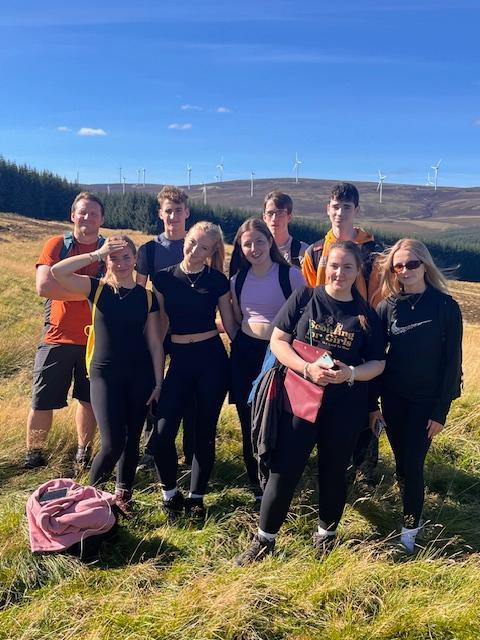
Our pupils seeing Geography in Action
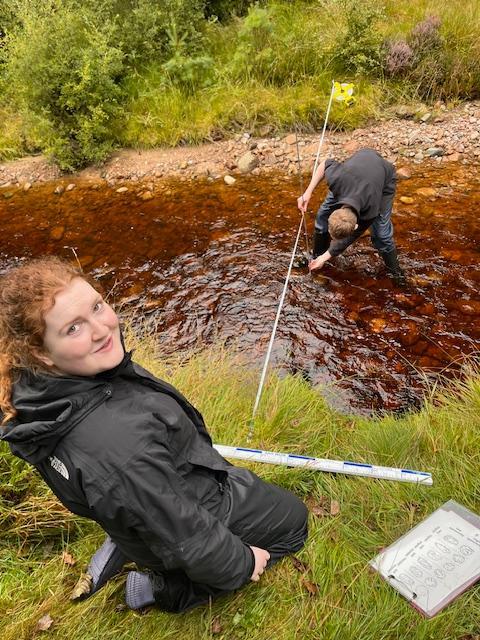
Geography in Action
Our pupils getting practical experience
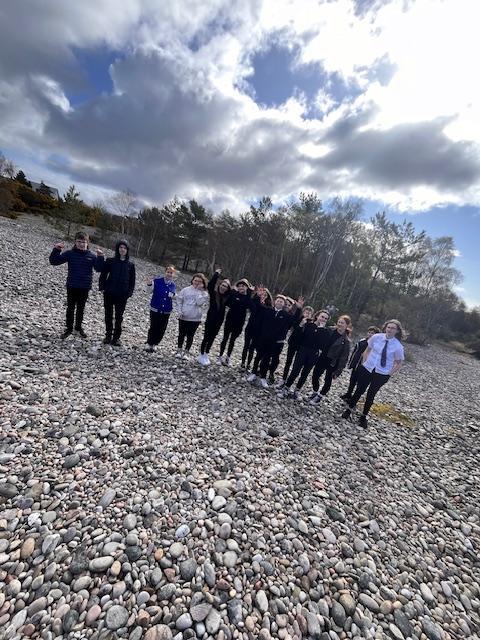
Geography in Action
Our pupils enjoying outdoor learning
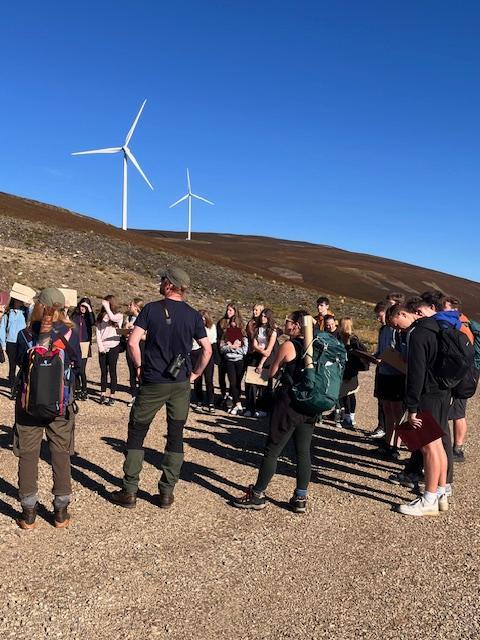
Geography in Action
Local wind farm
Geography in Action
Our local wind farm
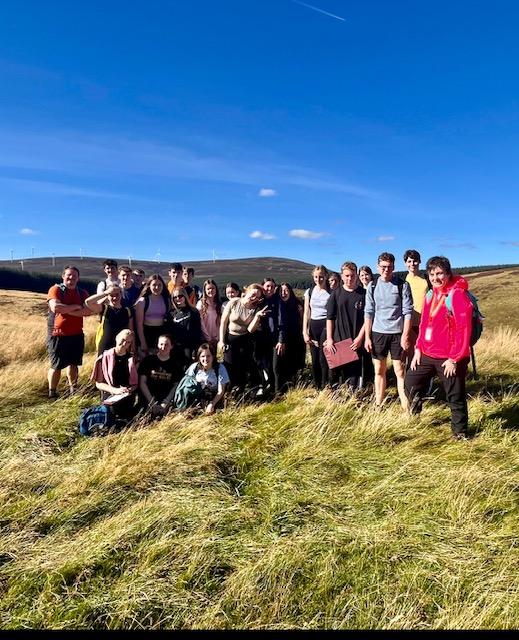
Geography in Action
Our local wind farm
Courses
S1
Course 1: Places
This unit of work introduces our new S1 classes to the seven continents of the world and the countries within them. Pupils will explore the geographical features of each continent on a world map, focusing on mapping the countries in Africa, Asia, and Europe. They will learn about the physical landscapes of these continents and discover the rich cultural diversity and varying populations that exist within each region.
Course 2: Understanding Earth
Pupils will begin with an introduction to Earth's layers; the inner core, outer core, mantle, and crust. They will explore the theory of plate tectonics by investigating the different types of plate boundaries - convergent, divergent, and transform. Pupils will examine real-world examples of tectonic activity such as earthquakes and volcanoes.
Next, pupils will study weathering and erosion, exploring the processes and agents involved, including water, wind, and ice. They will identify major landforms like mountains, valleys, plains, and plateaus. Finally, students will delve into river systems, examining their characteristics and the water cycle and will investigate how glaciers shape landscapes.
S2
Course 1: Geographical Skills
The S2 Geography Skills course is designed to give pupils essential skills and techniques needed to understand and analyse geographical information. Through a combination of theoretical learning and practical applications, pupils will enhance their ability to interpret maps, analyse data, and explore the dynamic relationships between people and their environments.
Pupils will learn:
- Map Reading and Interpretation: pupils will learn to read OS maps. They will develop skills in identifying key features, understanding scale, and interpreting symbols.
- Data Analysis and Presentation: The course emphasizes the importance of data in geography. Pupils will analyse and present data using graphs and charts.
Course 2: Natural Regions
Students engage in a unit titled "Natural Regions," exploring topics such as the Arctic Tundra, Deserts, and Rainforests. For each biome, they examine the climate and learn how plants and animals adapt to extreme conditions. Additionally, the unit delves into how the people living in these environments thrive in their unique circumstances.
Course 3: Climate Change
Pupils will examine the environmental issue of climate change through the following key perspectives:
- Key Causes of Climate Change: Understanding the primary drivers behind climate change.
- Effects of Climate Change: Analysing the impacts on people, places, and the environment.
- Solutions to Manage Climate Change: Exploring effective strategies and actions to address and mitigate climate change.
S3
Course 1: Glaciation
The S3 Glaciation course provides pupils with an in-depth knowledge of the processes and impacts of glaciation on the Earth's landscapes.
Key topics include:
- Glacier Formation and Types: Understanding how glaciers form and the different types of glaciers present in various environments.
- Erosion and Deposition: Exploring the processes of glacial erosion and deposition and their effects on landforms.
- Erosional features such as Corrie, U- shaped Valley & Pyramidal Peaks
- Depositional features such as Terminal Moraine, Drumlins and Eskers
Course 2: Coasts
The S3 Coasts course explores the dynamic processes shaping coastal environments and their significance to both natural ecosystems and human activities. Students will study the formation and characteristics of key coastal landforms such as beaches, cliffs, and estuaries.
Key topics include:
- Coastal Erosion and Deposition: Understanding the processes that shape coastlines and the factors influencing erosion and sediment transport.
- Human Impact on Coasts: Examining the effects of urbanisation & tourism
Course 3: Population and World Development
The S3 Population course examines the dynamics of human populations and their impact on the world. Pupils study:
- Population Structure: Understanding age, gender, and demographic transitions.
- Migration: Analysing the causes and effects of migration, both voluntary and forced.
Course 4: Weather
The S3 Weather course provides pupils with an understanding of atmospheric processes and weather.
Key topics include:
- Weather Patterns: Exploring the factors that influence local and global weather systems.
- Meteorological Tools: Learning about instruments used in weather forecasting, such as barometers and anemometers.
- Severe Weather Events: Analysing the causes and impacts of extreme weather conditions, including storms, floods, and droughts.
S4- Pupils are offered SQA courses at National 3, 4 and 5.
National Geography has four main areas of Study:
Physical Environments:
- Coasts
- Glaciation
- Weather
Human Environments:
- Population
- Rural
- Urban
Global Issues:
- Climate Change
- World Health
N4/5 Added Value Unit: The Geography Added Value Unit provides pupils with an opportunity to apply their geographical skills and knowledge in a practical context. Through a project-based approach, pupils will investigate a specific geographical issue, using research, data collection, and analysis. Pupils are then required to communicate results effectively through written reports or presentations.
Higher Geography has four main areas of Study:
Physical Environments:
- The Lithosphere (Coasts & Glaciation)
- The Hydrosphere (Rivers)
- The Biosphere (Soil)
- The Atmosphere
Human Environments:
- Population
- Rural Farming in the Sahel
- Urban
Global Issues:
- Climate Change
- Development and Health
Higher Added Value Unit: Building on the skills developed in N5 Geography, the Geography Added Value Unit offers pupils the chance to apply their geographical knowledge in a practical setting. Through a project-based approach, students will investigate a specific geographical issue, employing research, data collection, and analysis techniques. They will then communicate their findings effectively through written reports or presentations, enhancing their ability to convey complex information clearly and confidently.
Photographs
Teachers:
Ms C Cusack
Senior Phase Study Materials - N5

|
N5 course notes bible 2020 | [pdf 3MB] |

|
|
|
N5 Tool Kit Geo | [pdf 1MB] |
|
|
|
N5 Model Answers PPQ Final Exam Booklet | [pdf 678KB] |
|
Senior Phase Study Materials - Higher
|
|
Higher Course Notes Bible | [pdf 2MB] |
|
|
|
h geography - exam skills | [pdf 277KB] |
|
|
|
H Model Answers PPQ Final Exam Booklet | [pdf 1MB] |
|
Help with Revision:
|
S6 |
Residential fieldwork to complete NAB1 of AH course |
|
S5 |
Residential fieldwork and revision weekend prior to exams Lunchtime revision and tutorial sessions |
|
S3-4 |
Lunchtime tutorials |
|
All Classes |
Extensive use of websites for classwork and revision. |
Helpful Links:
http://www.trekearth.com
http://ga.water.usgs.gov/edu/watercycle.html http://www.geography.learnontheinternet.co.uk/index.html
http://www.bbc.co.uk/
http://www.sln.org.uk/geography/
http://www.usgs.gov/
http://earthquake.usgs.gov/
http://essp.und.edu/
http://www.und.edu/dept/Geog/mainpage.htm
http://www.orbitexperience.com/ http://www.uwsp.edu/geo/faculty/ritter/glossary/index.html
http://www-misr.jpl.nasa.gov/
http://www.fiu.edu/~srimal/ppt.htm
http://www.pbs.org/wnet/savageearth/animations/
http://www.japan21.org.uk/ http://www.geography.learnontheinternet.co.uk/topics/flamborough.html http://www.ersdac.or.jp/ASTERimage/ASTERimage_library_E.html http://geoearthkam.tamu.edu/ek-mg2.htm http://www.intute.ac.uk/socialsciences/blog/category/geography/ http://www.waveofdestruction.org/
http://www.wildlife-international.org/index.html http://www.griffith.edu.au/ins/collections/webb/content1.html http://earthquake.usgs.gov/eqcenter/recenteqsww/index.php?old=world.html http://www.nhc.noaa.gov/index.shtml
http://www.physicalgeography.net/home.html http://www.earthscienceworld.org/images/about.html http://geographyatthemovies.co.uk/index.html